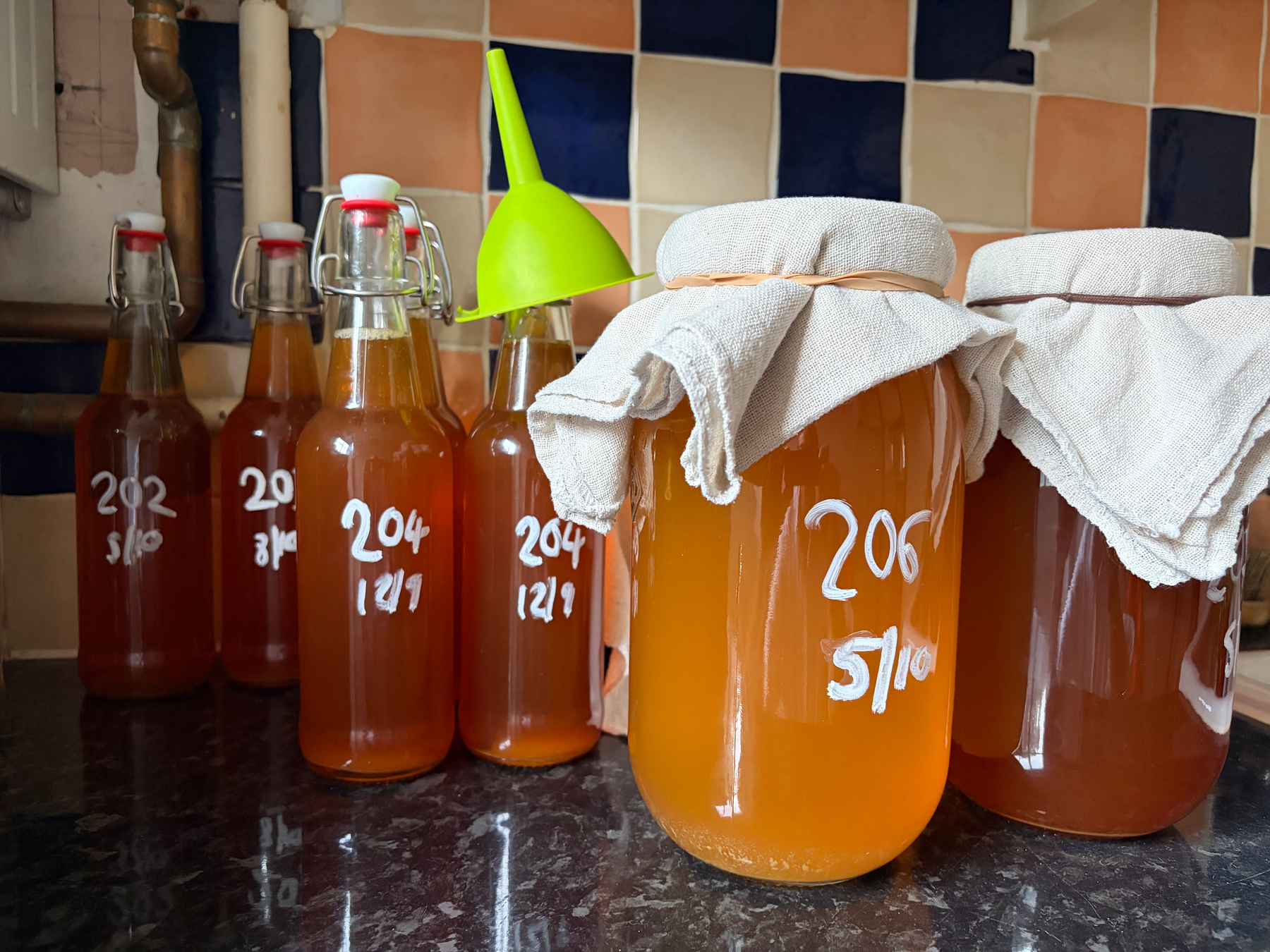
After 208 batches, it is time to up my kombucha game
I was first introduced to the idea of kombucha during a conversation with the man who ran our local plastic free shop when he made a passing comment that he was drinking a lot less (alcohol) since he had started brewing kombucha and that it was good for you. At the time I felt I was drinking too much, so the idea fell on fertile ground and within a few days I had watched a few videos and bought the tools I needed to start.
Kombucha is slightly fizzy and tangy fermented tea which probably originated from China around 2000 years ago. You can have it plain, or you can add flavours to it during the process. It usually has < 0.5% alcohol.
The best videos I found to get me started with kombucha were from You Brew Kombucha.
You can buy it from supermarkets but it is a distant cousin to making your own - usually it is overly sweet, force carbonated, not live and expensive.
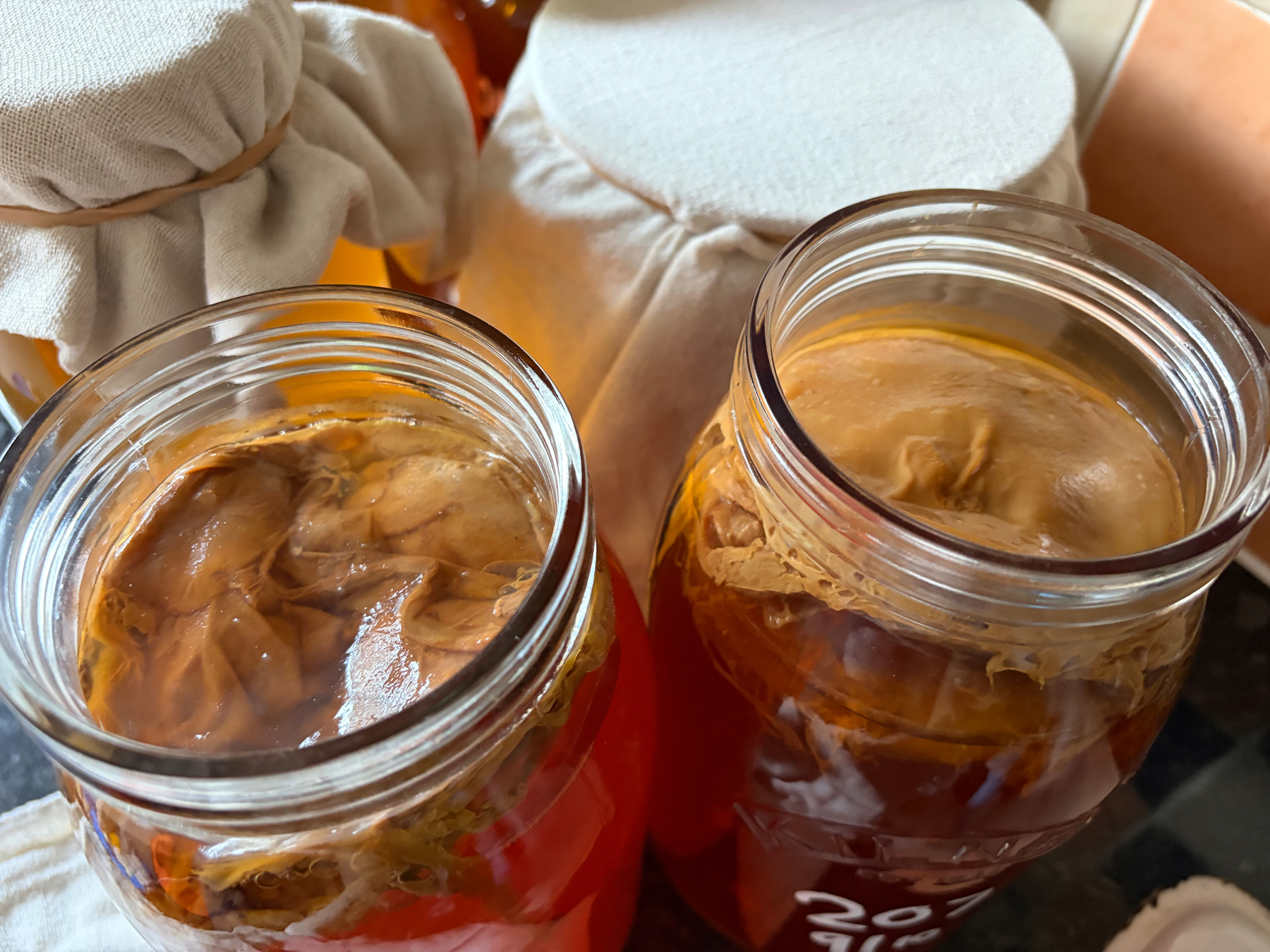
The key thing you need to brew kombucha is a starter tea and a Scoby - a Symbiotic Culture of Bacteria and Yeast - basically a living colony of bacteria and yeast that eats sweetened tea (black, green or even apparently oolong). It looks like a rubbery and slimy disc (sometimes bits hang off it making it look like you have brains in jars!) I bought mine from Freshly Fermented for the pricey sum of £12.25 - a bargain if you consider I have now made 208 batches from that one purchase! You can also just ask someone you know who brews kombucha as the Scoby grows over time and needs splitting fairly regularly.
I also bought some large Kilner jars and some bottles from Amazon to put everything in.
The process is simple: (this is for black tea - green tea needs a lower temperature, more tea for less time)
- Heat up 130g of granulated sugar in water to near boiling
- Put in 4 tea bags and let them steep (I use Tetley Tea)
- Remove the tea bags and pour the sweetened tea into a clean jar
- Top up the jar with cold (ideally filtered*) water
- Add your starter tea and Scoby (it will not like hot water, but it should now be just warm)
- Stir then cover with a muslin held with a rubber band
*depending on where you live your water may have chlorine in it that will harm the brew. You can leave tap water standing out for half a day to allow chlorine to dissipate.
Then you leave it, away from sunshine, for 7-14 days depending on your specific conditions and taste (I do 13 days) to complete the first ferment. The yeast eats the sugar, turning it into CO2 and a little alcohol, then the bacteria turns the alcohol into an acid that makes it sour and tangy.
When the taste is right, remove the Scoby and some of the liquid (for my 2L jars, I take about 500ml) - this is what you need to start the next batch. Filter the rest of the liquid into some bottles (add your flavouring at this point) and leave for another 3+ days (again depending on conditions). As the bottles are sealed the CO2 is trapped making the kombucha fizzy - how fizzy is up to you! When they are about right - pop them in the fridge to prevent any further fermenting. If you have added any flavour - the bottles may need ‘burping’ (releasing some of the pressure) as you have likely added some more sugar for the yeast to eat.
The one key thing to watch out for is mould (any mould means the whole batch, Scoby and all needs throwing away). When I first started I struggled with this as the Scobys do crazy things during the fermentation but there is a very useful website resource that alleviated my fears. Ultimately the process is acidic and the Scoby creates a micro-environment that is not mould friendly, so with some basic hygiene the risk is low. There are some people who sanitise all their equipment thoroughly, but given the Chinese were making this 2000 years ago I just do the basics and stay observant, and I have so far never had mould!
Upping my game
Until recently I have just been doing three 2L batches of black tea kombucha on a rolling factory line which produces 5 bottles a week (so we have a glass at most breakfasts).
As I have some spare time I have been looking to up my game. Firstly I have added a nearly 4L jar into the mix - adding 6 bottles to the cycle. If it works out I might either replace the smaller 2L jars with bigger ones or add more as it would be good to produce more.
Secondly I am expanding the teas to be used - I have my first green tea batch underway and I am keen to try Oolong. You can use any tea from a real tea plant (Camellia sinensis).
Finally I really want to experiment more with flavours. In the early days I tried summer fruits and I think pineapple - the quantities were wrong and I did not burp the bottles so there was a lot of explosive kombucha! More recently I tried lemon (peel) and rosemary which was lovely. I have also been recommended apple and ginger - I am not a fan of ginger but apple and cinnamon would work. Unfortunately my family is less of a fan of flavours, so I will only be able to experiment on occasional batches.
If you have any suggestions for flavours that work well, or any questions about brewing kombucha, post a comment below.